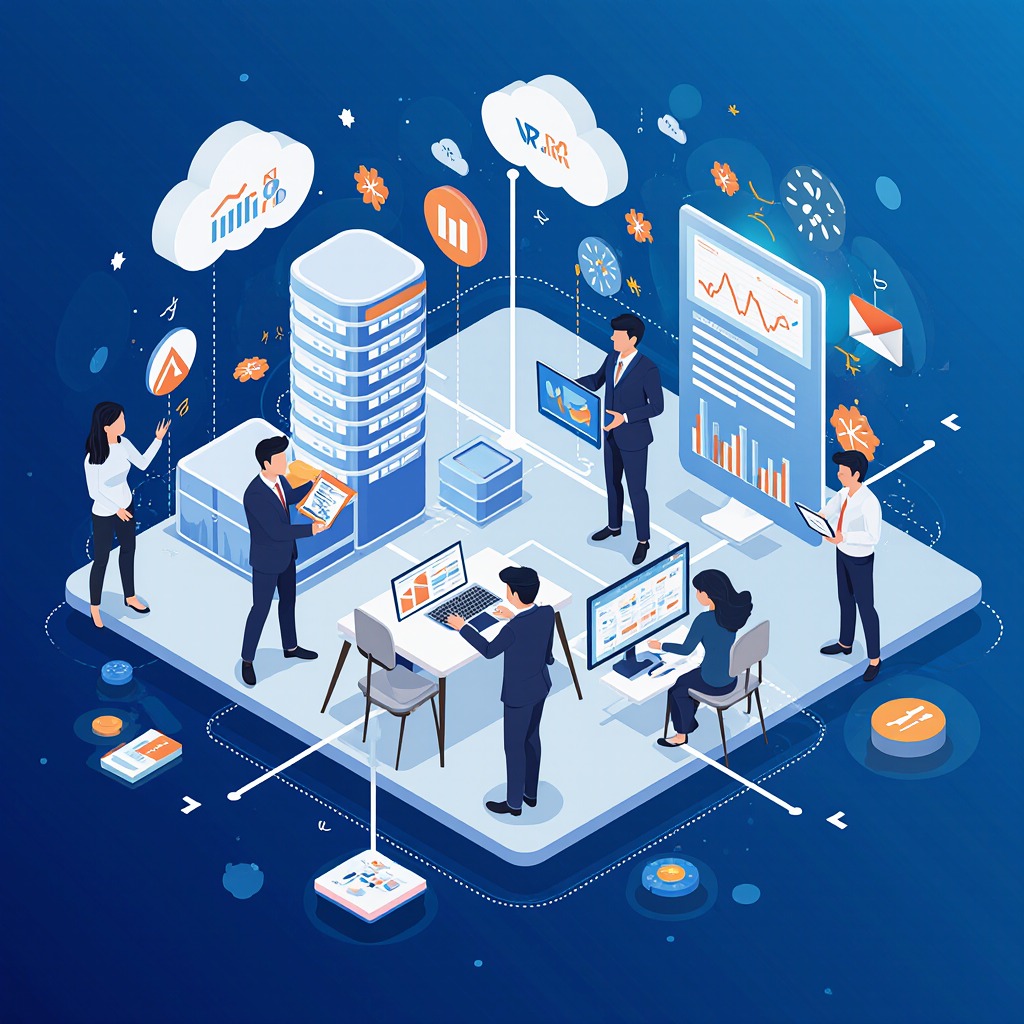
It Services and Solutions for Manufacturing Industry: In order to adapt to today’s fast-changing world, manufacturing is changing dramatically. Now, advanced technologies are combined with information systems that are more important than ever in manufacturing. Efficiency and productivity, cost-cutting are the services that offer manufacturers the tools to fine-tune their operations with real-time data and make constant data-driven decisions. In a world of increasingly severe global competition, Business is an edge. IT solutions take care of that for you.
More and more, the manufacturing industry is relying on up-to-the-minute technology like the Internet of Things, artificial intelligence, and cloud computing to satisfy market demand. IT services help manufacturers in this sector integrate these default technologies so that everything is in harmony. These innovations allow for real-time monitoring, predictive maintenance, and improved resource management, all of which are critical for keeping continuous production running smoothly without significant breaks in output.
Manufacturers now need IT systems that can adapt to their changing business needs with the times. Whether it’s through cloud-based data storage platforms or tailor-made supply chain management software made specifically for a business, IT solutions for manufacturing deliver support at every point in its range of production processes. By taking on these kinds of services, manufacturers can set themselves up for success as they venture into fresh markets and ensure that they remain competitive in an ever-changing commercial environment.
The Role of IT Services in Manufacturing
IT services tailored to the manufacturing industry provide multiple solutions that can convert traditional operations into very efficient automatic data processing. But here are just three examples: 1. The use of IT products can realize enterprise-wide resource coordination. For Production Information Management (PIM) as a component part, this began when mainframe computers were first introduced. Pieces of equipment that collect and process production performance data (PPD) are called BOMs, which stands for Bill of Materials.
Not all plant managers are happy with an early version of PIM, nor do they think it provides complete data processing coverage. 2. By integrating all elements of a manufacturing process into one framework, a general goal can be achieved, thereby 3. Greater data clarity. The use of IT allows manufacturers to forecast future trends and make smarter decisions concerning their operations. Thus, manufacturers are able to minimize production line downtimes through more accurate monitoring of equipment conditions, while also reducing the risk of a supply chain failure.
In manufacturing, cloud-based solutions are increasingly being used. Manufacturers can use cloud-based technology to remotely access and store crucial data. Not only do these new technologies improve data access, but they also help lower infrastructure costs for manufacturers, who no longer need the expensive on-premise servers required of an earlier generation. Cloud solutions offer flexibility and scalability as well as security, all three of which are points that mean factories today may grow without undue fetters.
Key IT Solutions for the Manufacturing Sector
Here are a number of the critical technologies and services being taken up by manufacturers: For the manufacturing industry, in particular, IT is creating new solutions designed to tackle specific problems and improve operational efficiency.
- Industrial Internet of Things (IIoT): IIoT connects machines, sensors, and devices within the manufacturing plant to the internet, allowing for real-time data collection and analysis. With IIoT, manufacturers can monitor machine performance, track the status of inventory, and predict equipment failures before they occur. This data-driven approach enhances efficiency, minimizes unplanned downtime, and improves overall asset management.
- Automation and Robotics: Automation has revolutionized manufacturing processes, enabling businesses to increase production speeds while maintaining high levels of precision. Robotics systems powered by AI and machine learning can handle repetitive tasks such as assembly, packing, and material handling, reducing human error and increasing safety in the workplace.
- Predictive Maintenance: Through data analytics and machine learning, predictive maintenance solutions can monitor equipment conditions and predict when a machine will require maintenance or replacement. By performing maintenance tasks before critical failures occur, manufacturers can extend the lifespan of machinery and avoid costly disruptions.
- Supply Chain Optimization: IT solutions that leverage data analytics can optimize the entire supply chain by forecasting demand, managing inventory, and tracking shipments in real-time. This helps manufacturers reduce lead times, improve order accuracy, and manage resources more effectively.
Benefits of IT Services for the Manufacturing Industry
The integration of IT solutions into the manufacturing sector brings numerous benefits, both tangible and intangible.
- Scalability and Flexibility: IT solutions enable manufacturers to scale their operations according to business needs. Whether expanding production capacity or entering new markets, digital solutions provide the flexibility to adapt to changing demands and technological advancements.
- Improved Operational Efficiency: IT services automate processes, reducing the time spent on manual tasks. By enabling seamless communication between various systems and departments, manufacturers can minimize errors and delays, leading to higher productivity.
- Cost Reduction: By adopting IT solutions like cloud computing and predictive maintenance, manufacturers can lower operational costs. Cloud-based services eliminate the need for expensive on-premise infrastructure, while predictive maintenance reduces costs associated with unplanned downtime and equipment failure.
- Better Decision-Making: Data collected from IoT devices, ERP systems, and predictive maintenance solutions provide valuable insights that support better decision-making. Manufacturers can analyze production trends, identify bottlenecks, and make proactive adjustments to enhance overall performance.
- Enhanced Quality Control: IT services enable continuous monitoring of production processes, ensuring that quality standards are maintained throughout. Real-time data analysis allows manufacturers to quickly identify any defects or inefficiencies in the production line, ensuring that only the highest quality products are delivered to customers.
Overcoming Challenges with IT Solutions
But there remain hurdles to how far IT services can be adopted in manufacturing. For one thing, the implementation of complex technologies requires that your workers are not only adept in IT but also good at automation systems. In addition, manufacturers still have reasons to worry about cyber attacks on their businesses as more and more of these activities become digitized. As such, it is fundamentally important that each business invests heavily in security measures for data protection and also for safeguarding intellectual property rights.
Moreover, some manufacturers -especially in traditional sectors may meet staff resistance if they implement the technology in their employees who are used to manual processes. This requires adequate teaching and clear demonstration of how IT solutions will only serve as a year ahead for their business.
The Future of IT Services in the Manufacturing Industry
The future of IT services holds even more innovations for 5G-connected factories, as other emerging technologies like blockchain and AI come on board. The combined application of 5G with AI and blockchain will give manufacturing enterprises–including those in China–new capabilities in terms of innovation and streamlining their operating architectures.
With faster communication from 5G, machines and devices on the factory floor will be linked together in ways not possible before. The next step in IoT connectivity. Manufacturers will collect more detailed data in real-time thanks to 5G, therefore further sharpening and increasing efficiency over a wide variety of processes. For example, real-time production adjustments that are based on information from machines, sensors, and other sources will help manufacturers cope with high-demand cycles and avoid bottlenecks caused by the entire cycle of preparing a product for market being delayed.
AI-powered machines, machine learning systems, and robotic process automation are already being introduced into manufacturing. In the future, AI will not only intensify existing processes but also be the driver for autonomous manufacturing. AI predictive systems can predict consumer behavior, forecast demand, and make supply chain management more efficient.
In addition, blockchain technology provides a new method for managing the whole supply chain. It can generate auditable records of all transactions and movements, as well as impenetrable (or at least very secure) digital certificates connected to those records. This ensures total accessibility and guarantees the quality and originality of each product. For manufacturers who have to deal with raw materials or high-value goods, such transparency might prevent fraud and increase their operational confidence.
Key Areas Where IT Services Drive Transformation
The continuous integration of IT services is paving the way for digital transformation in manufacturing. Below are several key areas where IT services are driving significant change in the industry:
- AR and VR: With IT services available, manufacturing processes and machines make increasing use of both virtual reality(VR) for training in product structure design or manufacturing, specifying instructions on how to assemble the end product. Such instruction is often given by Asus’s 4000 people who repair as many motherboards per year as possible.
- For example, with AR glasses, maintenance personnel can solve problems with the equipment and receive real-time instructions in the process. For VR, where product design naturally has an immersive component, and 3D models can be interacted with live. This provides engineers a real advantage before they go to prototype the product — reducing design mistakes and shaving years off development schedules.
- Custom Software Solutions: Every manufacturer has unique requirements, from process management to product design. In light of the movement away from one-size-fits-all solutions in manufacturing businesses, custom-built software is now becoming the order of the day. By adapting software to suit how they do things and neglecting features they don’t need at all, just those which can be used in real-life scenarios, they are able to refine workflows, automate job assignments, and justify decisions throughout the production process. This brings them a competitive advantage in a fast-changing market.
- Digital Twin Technology: One of the most exciting developments in manufacturing is the concept of digital twin technology. A digital twin is a virtual representation of real-world manufacturing assets, systems, and processes. IT services that support digital twins enable manufacturers to simulate production processes, monitor real-time performance, and test modifications or new configurations without disrupting ongoing operations. This minimizes risks from physical trials, leads to higher efficiency in production, and fosters product innovation.
- Advanced Data Analytics: Modern IT services should give companies the ability (and responsibility!) to analyze the massive amounts of data flowing from machine sensors and IoT devices. With advanced data analytics, manufacturers can find hidden patterns in production data from optical engineers. They can also use advanced data analytics to optimize products for quality control. This data-driven decision-making helps manufacturers adapt to changes in the market proactively and shape their own processes.
- Cybersecurity Solutions: As manufacturing becomes more connected, so rises the need for strong cybersecurity solutions. Cyberattacks, data breaches, and theft of intellectual property can strike at any time without these essential IT services that have robust security checks in place. With more and more devices being interconnected and data now flowing over cloud platforms, an all-encompassing cybersecurity strategy is just the right thing to protect both data and infrastructure.
Overcoming Barriers to IT Adoption in Manufacturing
But even if it is generally agreed that the advantages of IT solutions in manufacturing are self-evident, many companies still encounter headaches when having to adopt new technology. A major blockade is the high initial cost of implementing an IT infrastructure. Small and mid-sized manufacturers may find themselves unable to afford to integrate advanced IT services into their operations, as it means a great financial investment. Yet the long-term savings and productivity gains associated with IT services can often more than justify their up-front costs, particularly when cloud services and subscription models sharply reduce the initial outlay.
Another issue, however, is the gap in the workforce’s skills. With IT playing a more and more essential part in manufacturing, the need for personnel who are literate in both machine processing and information technology is growing fast. Putting training manpower in place and upskilling the workforce are very necessary aspects of successful IT adoption for manufacturing companies. Companies that take steps to educate their staff about both the benefits of new technologies and how to use such systems are in a better position to benefit from digital transformation.
A third problem lies in the fact that legacy systems at older plants may not be seen as having adequate capacity to accommodate modern IT services. Upgrading these requires careful planning and, probably, a complete reconstruction of their infrastructure. For this reason, they can seem quite daunting tasks. Yet experts from the likes of IBM or EDS who specialize in system integration help businesses make a smooth transition without interrupting ongoing operations.
Conclusion: Embracing IT for the Future of Manufacturing
The manufacturing industry’s future cannot be separated from its IT services and solutions. By using digital tools such as ERP systems, IoT, AI, and data analytics, producers can open up new routes to growth and efficiency. These tools also allow for innovation in old business practices like supply chain management. IT services are not only a method of process automation: they also enable manufacturers to think more strategically, adapt quickly to market changes, and produce high-quality products at a lower cost per unit.
As the industry learns to develop, manufacturers who have accepted IT solutions will be best placed to meet and master the next generation of challenges. Choose the right IT services to prepare your industry for a future that is more flexible, sustainable, and consistent with market requirements.